In the rainy season of 1910, a German ethnographer named Leo Frobenius arrived in the ancient Yoruba city of Ile-Ife with the conviction that he would find traces of the lost civilization of Atlantis. What he found instead was something far more consequential: a cache of terracotta and bronze heads of such astonishing naturalism, such quiet perfection, that they would overturn every European assumption about the artistic capacity of sub-Saharan Africa. The heads dated not to some transplanted Mediterranean colony but to the very heart of Yoruba civilization, produced between the twelfth and fourteenth centuries by artists whose technical mastery equalled or surpassed anything achieved in contemporary Europe. · 8 min read
Frobenius, to his credit, recognized the magnificence of what lay before him. But his framework for understanding it was fatally flawed. Unable to reconcile the sophistication of the sculptures with his preconceptions about African societies, he attributed them to a lost Greek colony — the remnants, he believed, of the legendary Atlantis that Plato had described. The heads were too refined, too individuated, too anatomically precise to have been made by Africans. Or so the logic went. It was a logic that would persist, in various guises, for decades.
The Discovery & European Disbelief
Frobenius’s expeditions to Ile-Ife between 1910 and 1912 yielded a remarkable harvest. Among the finds was a magnificent bronze head — the so-called “Olokun head” — which Frobenius identified as a representation of Olokun, the Yoruba deity of the sea and wealth. He attempted to remove it from Nigeria entirely; thwarted by colonial authorities, he took a replica and the original remained. But the pattern of European appropriation and misattribution was set. When photographs and casts of the Ife heads circulated in European academic circles, the reaction was a mixture of wonder and denial. That Africans could have produced art of such technical and aesthetic refinement was, for many scholars steeped in the racial hierarchies of the age, simply inconceivable.
It was not until the systematic excavations of the 1930s and 1940s — particularly those conducted by archaeologists such as Frank Willett — that the Ife corpus began to be understood on its own terms. Radiocarbon dating and thermoluminescence analysis confirmed what Yoruba oral tradition had long maintained: that Ile-Ife was an ancient center of civilization, and that its artists had achieved a level of naturalistic representation centuries before the European Renaissance.
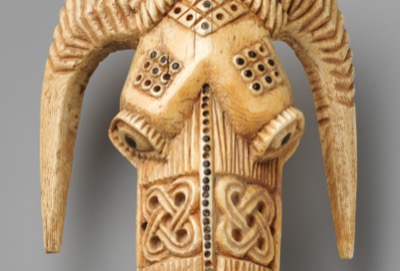
- Source:
- The British Museum
- Culture:
- Yoruba peoples, Ife
- Date:
- 12th–14th century
- Medium:
- Copper alloy, cast by lost-wax technique
- Production place:
- Ile-Ife, Osun State, Nigeria
The Bronze Heads — Lost-Wax Mastery
The bronze heads of Ife — more precisely, copper-alloy castings produced by the lost-wax (cire perdue) method — represent one of the supreme achievements of world sculpture. The technique itself is extraordinarily demanding. A wax model is first sculpted in minute detail, then encased in a clay mold. When the mold is heated, the wax melts away, leaving a negative space into which molten metal is poured. The process allows for only one casting; each work is therefore unique, and any imperfection in the mold or the pour destroys the piece irretrievably.
What distinguishes the Ife bronzes from other traditions of lost-wax casting — including those of Benin, which derived from Ife — is their extraordinary naturalism. The heads are neither stylized nor idealized in the manner of much African sculpture. They depict specific individuals with specific physiognomies: the set of a jaw, the breadth of a nose, the particular fullness of a lip. Some scholars have argued that they are portraits in the true sense, representations of actual kings (ooni) of Ife, though others suggest they served as idealized representations of divine kingship.
The walls of the finest Ife castings are remarkably thin, sometimes no more than a few millimeters. This thinness was not merely an aesthetic choice but a technical triumph: it required precise control of temperature, alloy composition, and mold construction. The copper alloys used at Ife varied in composition — some are true bronzes (copper and tin), others brasses (copper and zinc), and still others contain significant amounts of lead. This metallurgical diversity suggests a sophisticated understanding of how different alloy compositions affected the casting process and the final appearance of the work.
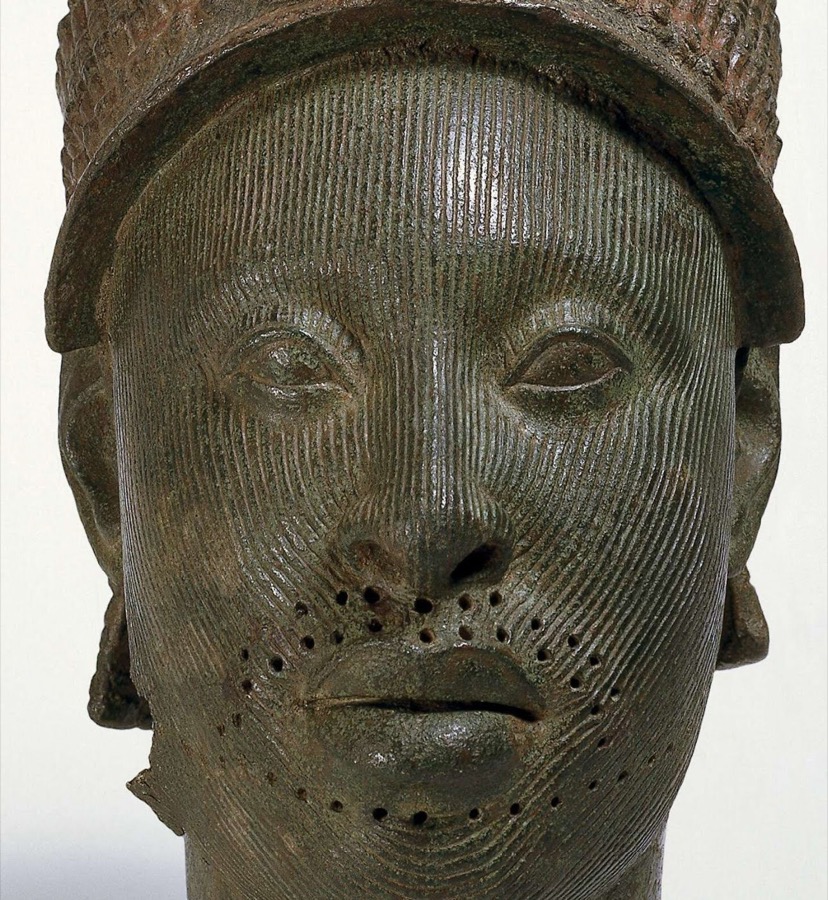
- Source:
- The Metropolitan Museum of Art (MET)
- Culture:
- Yoruba peoples, Ife
- Date:
- 14th–early 15th century
- Medium:
- Copper alloy, cast by lost-wax technique
- Significance:
- One of the finest examples of Ife royal portraiture, combining naturalism with the symbolic vocabulary of sacred kingship
The Terracotta Heads
If the bronzes of Ife astonish by their technical virtuosity, the terracotta heads achieve their power through a different register of expression. Made from fired clay rather than cast metal, the terracotta works are no less accomplished in their naturalism. In some respects they are more varied: the terracotta corpus includes not only serene, idealized heads but also works of startling expressiveness — faces contorted by illness, marked by scarification, or rendered with an almost brutal candor that suggests the documentation of actual physical conditions.
The terracotta tradition at Ife appears to be older than the bronze-casting tradition, with some examples dating to as early as the eleventh century. This chronological precedence has led some scholars to suggest that the naturalistic style was first developed in clay and subsequently translated into metal. The terracottas would thus represent not merely a parallel tradition but the very matrix from which the bronze-casting achievement emerged.
Among the most arresting of the terracotta works are the so-called “diseased heads” — representations of individuals afflicted with elephantiasis, tumors, or other pathologies. These works have been interpreted variously as medical records, as representations of enemies or criminals, or as images intended to ward off illness through sympathetic magic. Whatever their precise function, they demonstrate an observational acuity and a willingness to confront physical reality that sets them apart from the idealized conventions of most royal art traditions.
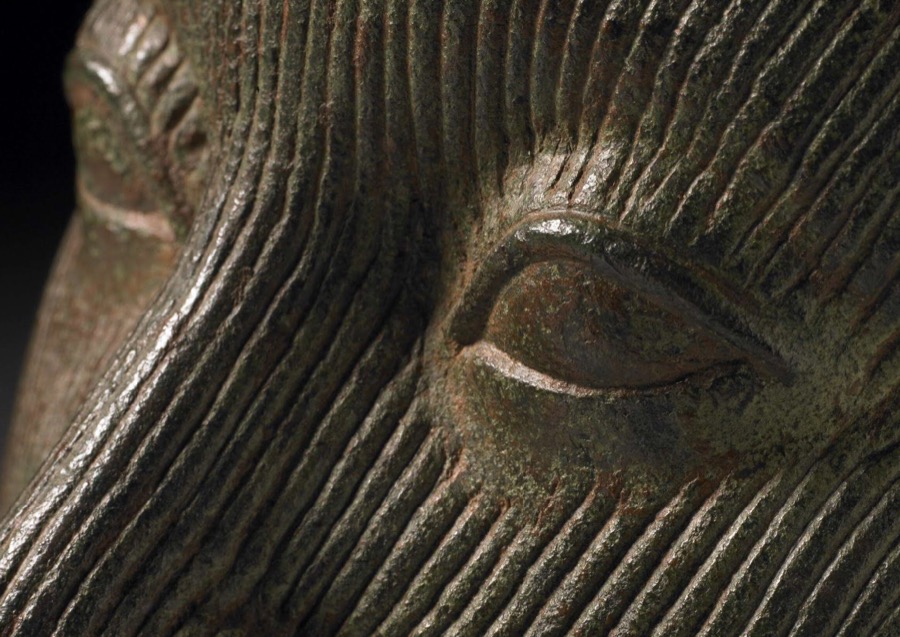
- Source:
- The British Museum
- Culture:
- Yoruba peoples, Ife
- Date:
- 12th–14th century
- Medium:
- Terracotta (fired clay)
- Production place:
- Ile-Ife, Osun State, Nigeria
- Description:
- Life-size terracotta head with naturalistic modelling, elaborate hairstyle, and fine parallel striations across the face
The Striated Facial Markings
One of the most distinctive features of the Ife heads — both bronze and terracotta — is the system of fine parallel lines that cover the faces of many of the sculptures. These striations have been the subject of extensive scholarly debate. Some researchers have interpreted them as representations of scarification marks (ilà), the facial incisions that served as markers of lineage, status, and ethnic identity among the Yoruba. Others have suggested that they represent a form of ritual preparation of the skin, or that they are purely artistic conventions intended to catch the play of light across the surface of the sculpture.
The most compelling interpretation may be the most literal: the lines represent the actual facial markings that were a ubiquitous feature of Yoruba social identity until the twentieth century. Different lineages and towns bore different patterns, and the marks served as visible signs of belonging and allegiance. On the royal heads, the striations may indicate the specific lineage of the ruler depicted, or they may represent the idealized markings appropriate to the office of the ooni. In either case, they remind us that these sculptures were not created in an aesthetic vacuum but were embedded in a complex web of social, political, and spiritual meaning.
The Significance of Ife
The importance of the Ife heads extends far beyond their aesthetic achievement, remarkable as that achievement is. They constitute the most compelling material evidence for the sophistication of Yoruba civilization at its height. Ile-Ife, according to Yoruba cosmology, is the place where the gods descended to earth and where human civilization began. The archaeological record, while it cannot confirm the mythological narrative, does confirm that Ife was a major urban center by the eleventh century, with a complex political structure, long-distance trade networks, and artistic traditions of extraordinary refinement.
The bronze-casting tradition at Ife gave rise, through processes that are still not fully understood, to the great brass-casting tradition of Benin. When the Portuguese arrived at the court of the Oba of Benin in 1485, they found a city of remarkable size and organization, with a royal court adorned with bronze plaques and figures that rivalled anything in contemporary Europe. The Benin tradition, in turn, became one of the best-known traditions of African art, particularly after the British punitive expedition of 1897 dispersed thousands of Benin bronzes to museums and private collections across Europe. But behind Benin stands Ife, the older and in many respects more accomplished tradition — the fountainhead from which so much of Yoruba artistic culture ultimately derives.
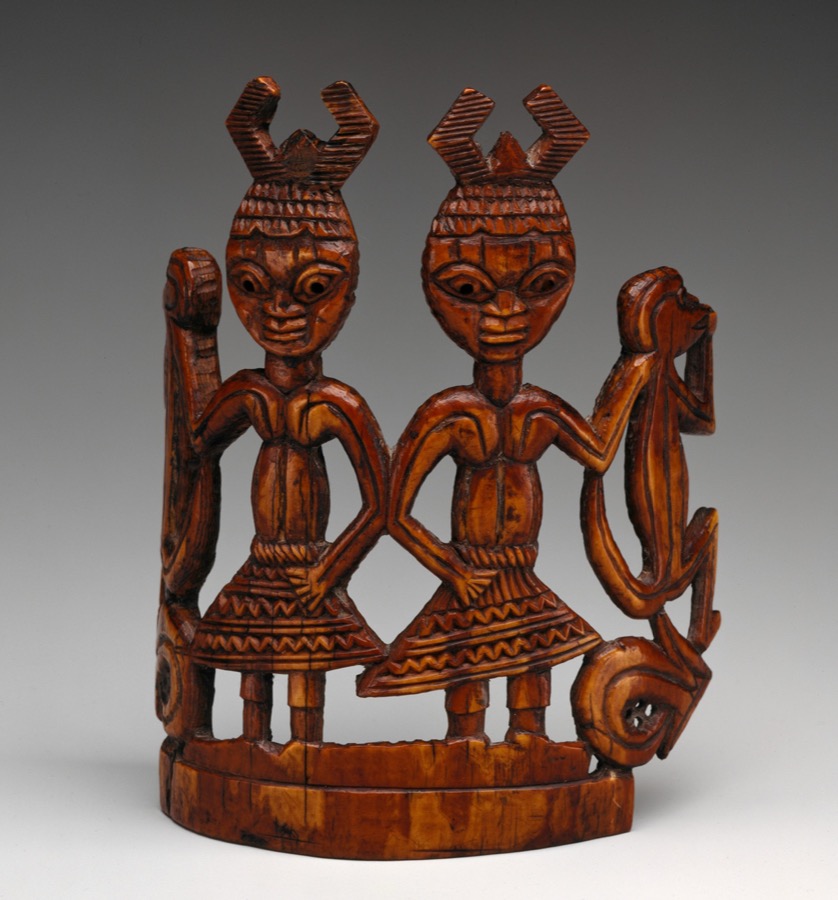
- Source:
- National Museum, Lagos / British Museum (comparative examples)
- Culture:
- Yoruba peoples, Ife
- Date:
- Circa 14th century
- Medium:
- Copper alloy
- Significance:
- Among the rarest of Ife sculptures — full-figure representations that extend the naturalistic tradition from portraiture to the complete human form
Today, the Ife heads are dispersed across several collections. The National Museum in Ile-Ife and the National Museum in Lagos hold the largest concentrations, but significant examples are also found at the British Museum in London and the Metropolitan Museum of Art in New York. Their dispersal is itself a chapter in the larger story of African art and European colonialism — a story of removal, recontextualization, and ongoing debate about repatriation. But wherever they are encountered, the Ife heads retain their capacity to astonish. They are, in the truest sense, revelations: works that reveal not only the genius of their makers but the poverty of the assumptions that made their existence seem impossible.